
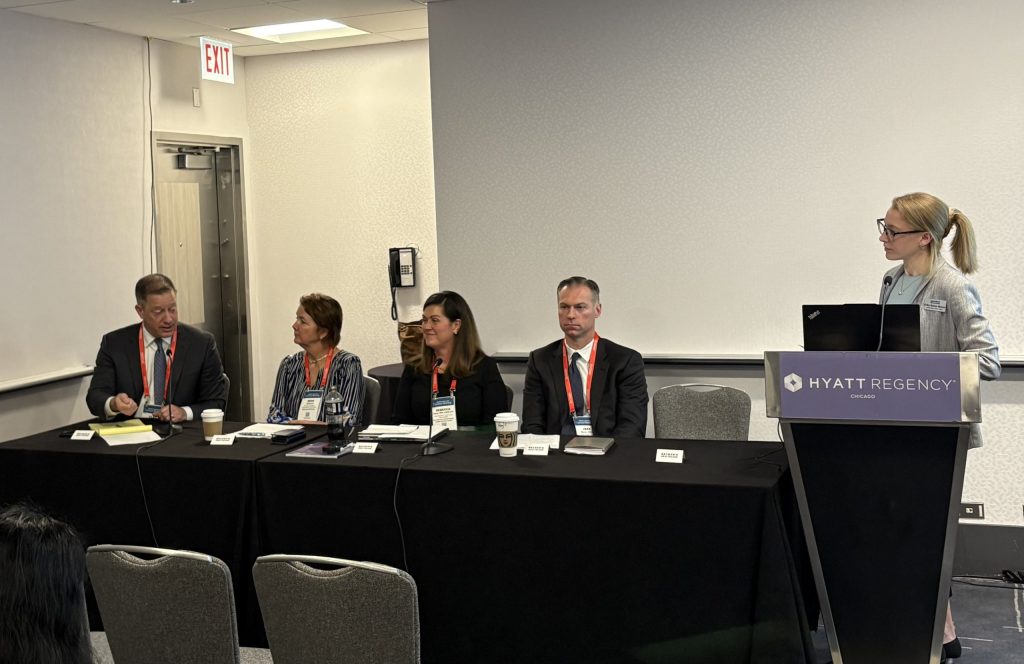
Across the AMC Leadership Forum at Becker’s 16th Annual Meeting, academic medical center (AMC) leaders kept coming back to the same reality: there are no quick fixes for the challenges in front of them, from workforce constraints to facility needs. Instead, they’re prioritizing 5- to 10-year strategies—even when the near-term trade-offs are painful.
That long-term posture showed up consistently in discussions on fiscal sustainability, capital planning, workforce pipelines, enterprise integration, and more. At the same time, participants agreed on the need to be intentional about how they lead, communicate, and support people in the short term.
Here are three themes that showed up time and again during the AMC track, sponsored by ECG.
1. Financial sustainability and capital reinvestment require a long view—and hard tradeoffs.
AMC leaders framed fiscal sustainability as something that cannot be solved within a single budget cycle, particularly given payer mix pressures, changes to the Medicaid program, and the obligation to support the full academic mission.
That reality is colliding with equally long-term capital realities. Aging infrastructure, capacity constraints, and rising construction costs mean many AMCs have little choice but to invest heavily in facilities-even when the payoff may be a decade or more away. Leaders were candid about the tension this creates: funding future-ready space often competes directly with short-term priorities like compensation and operating flexibility.
Despite the uncertainty, many panelists struck a pragmatic tone about the future, noting that healthcare is never without a sense of urgency; to paraphrase one attendee, “the sky is always falling at varying degrees of intensity.” And they agreed that sustainability will be marked by discipline. AMCs are becoming more explicit about sequencing investments, setting clearer priorities, and accepting near-term discomfort to protect long-term mission viability.
2. Workforce strategy has shifted from filling roles to building pipelines.
AMCs no longer see labor challenges as a recruiting problem but as an opportunity for pipeline design. Rather than trying to hire their way out of shortages, leaders discussed the importance of developing physicians who stay in the community by reaching further back in the training pipeline (i.e., more meaningful and strategic involvement in undergraduate medical education [UME] and graduate medical education [GME]). Leaders emphasized that retaining physicians in-state and in-region avoids the high cost, difficulty, and uncertainty of recruiting from other geographies. Recruiting and retaining physicians is expensive, disruptive, and increasingly unsustainable at scale, making a homegrown workforce both a strategic and financial imperative.
This thinking extended beyond just physician recruitment. Leaders described a waning interest in healthcare careers since COVID, at the very moment demand for care is soaring. In response, AMCs are working upstream-sometimes far upstream-to reshape how the next generation views healthcare. In the case of one panelist, that includes engaging younger students, even at the K-12 level, to promote awareness, spark interest, and help them see themselves as future healthcare workers.
GME was tightly integrated into this discussion. Panelists described GME as a strategic workforce engine-a way to build loyalty, reinforce community ties, and create “stickiness,” especially in underserved and rural areas. Leaders were explicit that these investments do not deliver quick ROI by design, but they reduce long-term dependence on travelers and external recruitment.
3. Academic–clinical alignment is no longer optional.
A persistent undercurrent across the AMC Forum was the cost of fragmentation between academic and clinical enterprises. Leaders described misalignment in goals, incentives, data, and governance as a drag on decision-making, workforce stability, and financial performance.
The consensus: AMCs need to align around shared outcomes first, then build strategy, measurement, and governance to support those outcomes. That means creating a single source of truth for data, modernizing compensation models so academic work isn’t squeezed out by productivity pressure, and recognizing that losing faculty is simultaneously a clinical loss and an academic one.
True alignment, leaders emphasized, is not just collaboration. It’s integration, and it requires intentional design over time.
Long-term plans only work when short-term trust-building is intentional.
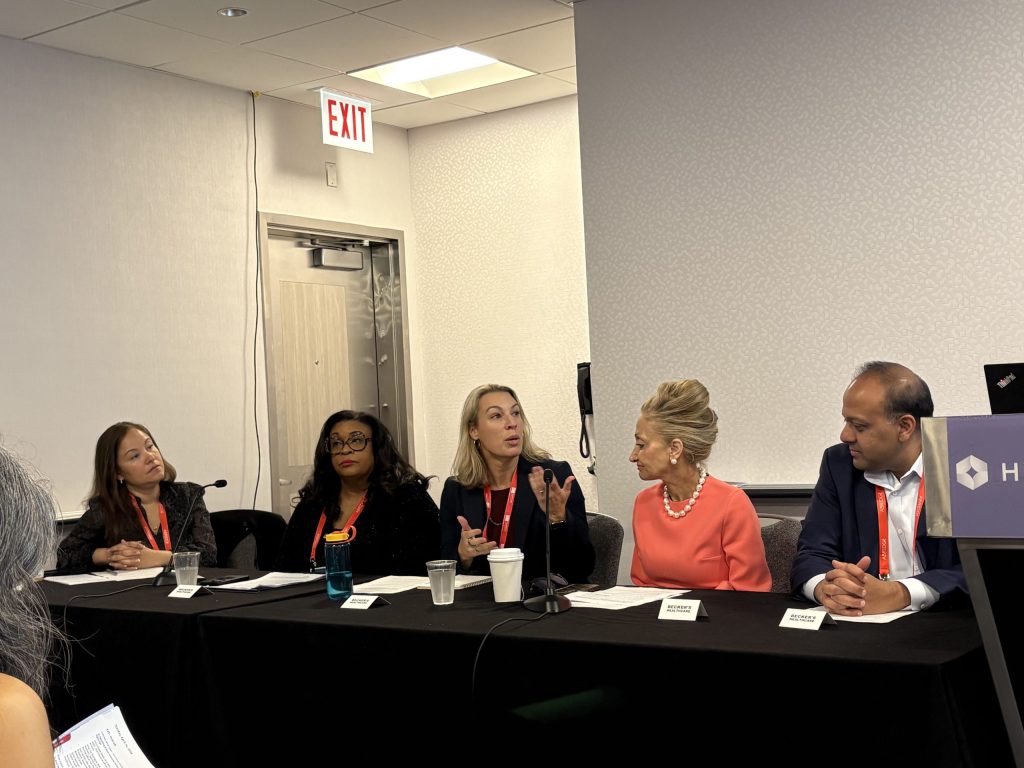
While the AMC Leadership Forum focused heavily on long-term strategy, leaders were equally clear about one risk: 5‑ and 10‑year plans fail if teams don’t trust leadership today.
To support long-term transformation, AMCs are pairing big bets with intentional short-term actions, especially around communication, transparency, and employee wellness:
- Relentless communication. Leaders emphasized over-communicating the “why” behind decisions, particularly during integration and change, and making communication two way rather than top down.
- Radical transparency. Sharing financial and operational data with academic and clinical leaders was described as confidence building and essential to making hard trade-offs feel principled rather than arbitrary.
- Well-being as an operational strategy. Rather than episodic morale efforts, AMCs are treating workforce wellness as a pillar tied to quality, safety, and retention—focusing on the work environment, not just individual resilience.
- Small, visible wins. Even when major investments take years to mature, leaders stressed the importance of reducing friction and improving ease of practice now to maintain credibility and momentum.
There may be no quick fixes, but long-term strategies succeed when leaders are equally disciplined about how they lead in the short term. Trust, clarity, and care for the workforce are not side efforts; they are what make the long game possible.
On our podcast, ECG CEO Chris Collins talks with Penn Medicine CEO Kevin Mahoney about the evolving role of academic health systems.