
What to Know
- Women’s health programs can’t scale without a workforce strategy designed to grow with them.
- Expanding women’s health requires expertise that extends beyond traditional reproductive care.
- Health systems can build needed capabilities through workforce development, partnerships, and new training pathways.
Expanding women’s health services is one thing. Building the workforce to deliver them is another. As health systems respond to evolving women’s health needs, workforce development is not always keeping pace. Systems often design programs and care models before determining whether they have-or can develop-the workforce required to deliver them.
This disconnect, combined with fragmented pathways to expertise, can constrain access, delay growth, disrupt continuity of care, and leave organizations with programs they cannot scale. For health systems looking to expand their women’s health services, workforce strategy and clinical strategy must be developed together.
The Need for an Expanded Workforce
Women’s health is evolving beyond its traditional focus on reproductive care. Women experience a substantial burden of cardiovascular disease, osteoporosis, depression, autoimmune disease, Alzheimer’s disease, and other chronic conditions.As such, health systems are being asked to address a broader range of conditions that are unique to women, affect women differently, and require care across multiple clinical areas (e.g., menopause, cardiovascular disease, cancer survivorship, chronic disease management, healthy aging).
Organizations that expand women’s health programs without corresponding workforce strategies risk limited capacity, inconsistent delivery, and difficulty scaling beyond a small number of highly specialized clinicians. Addressing these risks may require collaboration between health systems and academic institutions to define competencies, support interdisciplinary training, and align workforce development with emerging clinical programs. For many health systems and medical groups, sustainable growth may depend on developing or accessing specialized residency tracks, focused fellowships, physician development programs, advanced practice provider (APP) training, and academic partnerships.
Demand Is Growing Faster than Training Pathways
The challenge extends beyond the supply of clinicians. Strong demand for traditional training positions does not necessarily translate into sufficiently focused women’s health expertise. While nearly all available OB/GYN residency positions were filled during the 2026 Main Residency Match, fill rates alone do not guarantee depth of training in menopause, cardiovascular health, survivorship, or other differentiated women’s programs.
In many emerging women’s health domains, nationally recognized standards remain limited or are still evolving, and unlike most established specialties, there is no single pathway for developing women’s health expertise. Published assessments have identified gaps in formal curricula, dedicated clinical experiences, and standardized educational resources.
Additionally, the formality of training varies by domain. Formal training in urogynecology and reconstructive pelvic surgery includes an ACGME-accredited fellowship structure, defined educational requirements, and formal evaluation expectations, while training in areas such as menopause and women’s cardiovascular health is often delivered through institutional curricula, residency tracks, or postgraduate education.
What Leading Organizations Are Doing Differently
Health systems and medical groups that are successfully planning or expanding women’s health programs are giving workforce development the same attention as clinical program design. Doing so requires looking beyond recruitment to how organizations can build and expand expertise within their existing workforce. Recruiting established specialists remains important, but the limited scale and uneven availability of focused training pathways mean that recruitment alone may not be sufficient. Published models demonstrate that expertise can also be developed through competency-based education, residency tracks, focused fellowship curricula, mentorship, and structured clinical exposure.
Breast health may offer a preview of where several emerging women’s health domains are headed. Breast health provides a familiar multidisciplinary model, bringing together specialized clinicians, dedicated imaging, navigation, survivorship services, and coordinated referral pathways.
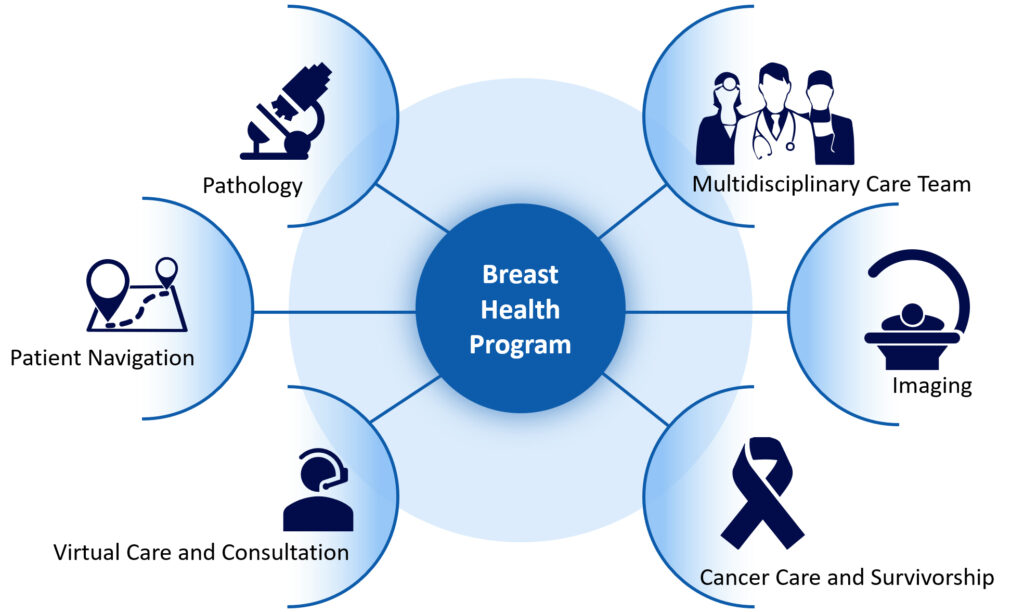
Emerging domains such as menopause, women’s cardiovascular health, and pelvic health may follow a similar trajectory, creating opportunities for health systems to establish differentiated Centers of Excellence before workforce models become more standardized.
Smaller and midsize health systems may not have the volume, faculty depth, or resources to build dedicated fellowships or comprehensive women’s health centers. Their workforce models should therefore reflect local needs, organizational scale, and available resources. More practical options may include:
- Prioritizing one or two clinical domains (such as the breast health example above).
- Developing focused capabilities within existing specialties.
- Partnering with regional academic programs.
- Using shared or visiting specialists.
- Optimizing appropriately structured virtual consultations and referral relationships.
- Providing structured development for physicians and APPs already serving the community.
The objective is not to replicate an academic medical center or larger health system, but to build the level of expertise and connectivity required by the organization’s clinical strategy and the needs of patients it serves.
Strategic Questions for Health System Leaders
As women’s health continues to evolve, workforce planning is becoming a strategic imperative rather than solely an operational consideration. That strategy need not look the same in every market; larger academic systems may build formal training pathways and multidisciplinary centers, while smaller organizations may focus on developing existing clinicians and using partnerships or referral networks to access specialized expertise. What matters is that the workforce model is intentional, proportionate to local needs, and capable of supporting the intended scope and quality of care.
Before approving the next women’s health program investment, leaders should determine whether the proposed workforce model is capable of delivering the intended access, quality, patient experience, and scale. Decisions regarding service line growth, physician recruitment, APP engagement, academic partnerships, and competency development will increasingly influence an organization’s ability to scale programs and meet growing demand. Health system leaders should consider the following as they evaluate the future of their women’s health strategy:
- Which women’s health domains offer the greatest strategic and community health opportunity given the organization’s scale, market needs, and available resources?
- What expertise and capabilities already exist, and where are the gaps relative to the organization’s women’s health priorities?
- What multidisciplinary workforce is required to support the intended care model and deliver a high-quality patient experience?
- Which capabilities should the organization build directly, and which should be developed through recruitment, academic partnerships, regional affiliations, shared staffing, virtual consultation, or referral relationships?
Answering these questions can help leaders build a workforce model that is intentional, proportionate to local needs, and capable of supporting the intended scope and quality of care. Giving workforce development the same attention as clinical program design positions organizations to build women’s health programs they can sustain and scale.
New maternity care coding rules could have significant implications for physician compensation and productivity. Check out our series on steps organizations can take
to prepare.