
Health systems have historically used medical director arrangements to allocate administrative time for service line development, clinical leadership, and quality improvement initiatives. When properly structured and implemented, these arrangements can advance organizational objectives and enhance the patient care experience.
However, recent federal enforcement actions signal increased scrutiny by the United States Department of Justice (DOJ) and the Department of Health and Human Services Office of Inspector General (HHS‑OIG) of medical director arrangements. Recent enforcement has emphasized the need to focus on supporting documentation of services and time, fair market value (FMV) payment for such services, and commercial reasonableness (CR).
In many instances, medical director arrangements fail to define services, lack meaningful time documentation, and do not reflect a legitimate business purpose—deficiencies that may trigger liability under the Anti‑Kickback Statute (AKS), the Physician Self‑Referral Law (Stark), and, by extension, the False Claims Act (FCA).
Recent Medical Director Enforcement Activity
Consequences of violating federal fraud, waste, and abuse regulations can be expensive, as illustrated in the following three cases.
New York-Presbyterian Hudson Valley
In December 2025, New York‑Presbyterian Hudson Valley Hospital paid $6.8 million to settle allegations that it provided improper compensation to an oncology practice through medical director and management services agreements in exchange for patient referrals. This settlement is related to a set of physicians many years ago, a challenge NewYork-Presbyterian inherited before NewYork-Presbyterian acquired Hudson Valley Hospital in 2015.
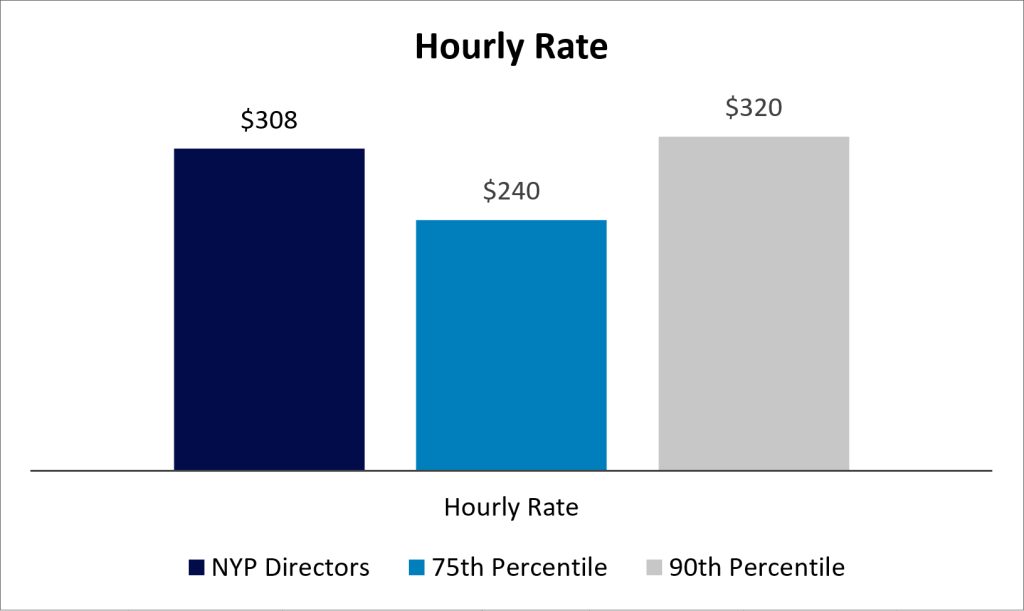
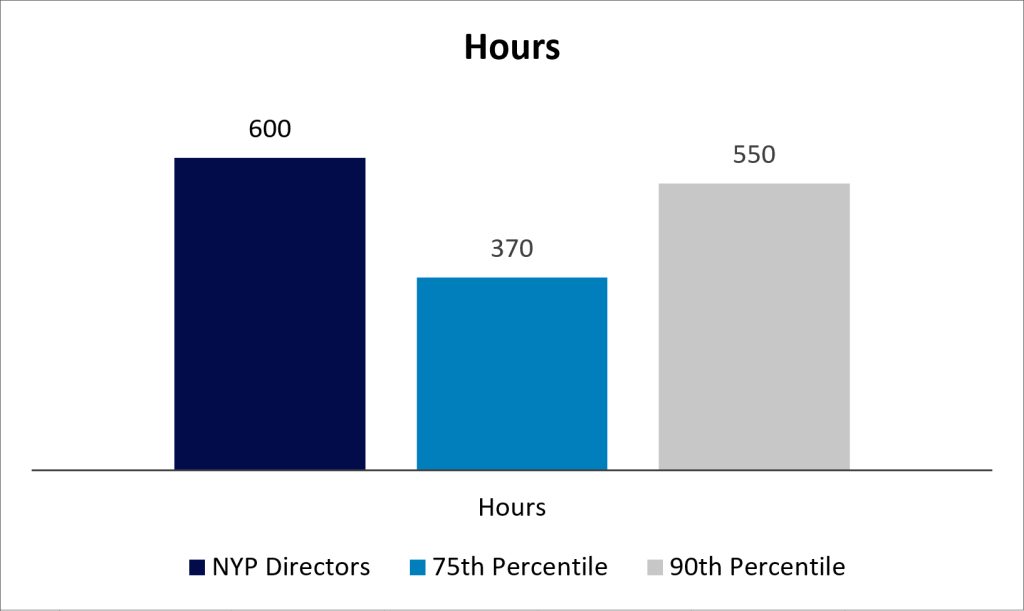
The two medical directorships at issue—a melanoma directorship and breast center directorship—were effective from 2011 through 2016, with payments continuing through 2019. Each agreement provided $185,000 annually for 600 hours of services, resulting in an effective hourly rate of $308.
According to allegations in the complaint:
- The melanoma center was never developed.
- Neither party had documentation of hours worked.
- Payments continued even after the agreements had expired.
Additionally, based on a review of the effective hourly rates, the compensation terms were at or above the 90th percentile of applicable market benchmarks for both roles, as reflected in table 1. The medical director agreements lacked FMV compensation terms, sufficient documentation of hours worked, and a commercially reasonable purpose for the roles.
TABLE 1: Medical Directorship Hours and Hourly Rates Compared to Market Benchmark¹
As a result, regulators concluded that the medical director compensation operated as remuneration to induce referrals, resulting in violations of Stark, AKS, and FCA.
Priority Hospital Group
In January 2026, the DOJ joined a qui tam action against Priority Hospital Group (PHG) and three PHG-managed long-term care hospitals. The complaint alleged that Riverside Hospital, a long-term care hospital managed by PHG, entered into multiple medical director arrangements to induce referrals. Specifically, the complaint stated that medical director compensation:
- Exceeded FMV.
- Was not linked to services actually performed.
- Was tied to patient referrals, including a requirement that one physician maintain a minimum patient volume at the hospital.
The DOJ characterized these medical director agreements as sham arrangements intended to induce referrals in violation of Stark, AKS, and FCA.
Traditions Health
In January 2026, Traditions Health agreed to pay $34 million to resolve civil liability under the FCA through a voluntary self-disclosure. The settlement addressed allegations that Traditions Health paid compensation to medical directors for services that:
- Were not actually performed.
- Were not commercially reasonable.
- Were provided before the execution of written agreements.
After identifying the issues, Traditions terminated responsible employees, terminated all home health medical director contracts, enhanced staff training, and engaged an outside consultant to assess its compliance program—efforts that resulted in cooperation credit from the DOJ.
Common Issues in Medical Directorship Settlements
With federal enforcement increasing in both frequency and severity of penalties, medical directorships will continue to represent a high-risk area within physician compensation and regulatory oversight.
Healthcare organizations should maintain contemporaneous documentation of the medical director’s time and ensure the role serves a legitimate business purpose. Organizations should also obtain and document FMV and CR support for these arrangements. Regular review of agreements to confirm they are accurate, current, and aligned with actual services is a critical component of an effective compliance program.
The DOJ may publicly identify physicians involved in AKS, Stark, and FCA violations. Therefore, beyond civil and criminal penalties, medical directors may also face significant reputational harm. In addition to keeping time submissions, maintaining supporting documentation of detail is important, which may require the following actions:
- Take and save detailed meeting minutes.
- Document attendance lists from meetings led by the medical director.
- Save dashboards reviewed, slide decks created, email chains, reports, or notes.
- Save plans, timelines, and action items from medical director-led initiatives.
- Document any analyses performed or recommendations given by the medical director.
As regulatory scrutiny of medical director arrangements intensifies, thoughtful structuring and implementation of these relationships are critical to minimizing compliance risk.
About the Authors
This piece was written in collaboration by Thompson Coburn and ECG Management Consultants. Thompson Coburn advises on legal and regulatory considerations, and ECG supports valuation, compensation, and FMV analysis. Please reach out to our teams if you need help evaluating your medical directorship arrangements.